
Blue-Green Algae & Your Pet
Blue-green algae blooms are a regular occurrence on Madison's lakes every summer, and they can be deadly to dogs within minutes. Here's what you need to know to keep your pet safe.
This Can Kill Your Dog in Minutes
Blue-green algae (cyanobacteria) can produce toxins that are fatal to dogs within 15 to 20 minutes of exposure. There is no antidote. Dogs are at especially high risk because they swim in affected water, drink from shorelines, and then lick the toxins off their fur. If you suspect your dog has been exposed, rinse them immediately with clean water and get to a veterinarian. Do not wait for symptoms to appear.
Why Madison Is a Hotspot
Our city is sandwiched between two large lakes with a long history of algae problems
Madison sits between Lake Mendota and Lake Monona, two of five Yahara Chain lakes that have been listed as impaired with excess phosphorus by the EPA since 2011. Agricultural runoff, urban stormwater, and fertilizer carry nitrogen and phosphorus into the lakes, creating ideal conditions for cyanobacteria to thrive.
Blue-green algae blooms are not occasional events here. They happen every summer. Public Health Madison & Dane County monitors 27 beaches and lake access points from Memorial Day through Labor Day, and beach closures due to algae and bacteria are routine. In recent years, Lake Monona alone has seen nearly 100 beach closures in a single summer season, and there have been instances where 16 of 19 area beaches were closed simultaneously.
Conditions can change rapidly. A beach that was safe in the morning can have a toxic bloom by afternoon, especially after heavy rain followed by hot, sunny weather. Wind can also push concentrated blooms to shorelines where dogs are most likely to access the water.
affected
each summer
season
change this fast
What Is Blue-Green Algae?
Despite the name, it's actually bacteria, not algae
Blue-green algae is the common name for cyanobacteria, microscopic organisms found naturally in all types of water. They're not technically algae at all. They're photosynthetic bacteria that clump together in the water, forming "blooms" that resemble algae.
Cyanobacteria blooms form most readily in fresh water when temperatures are above 75°F and conditions are sunny. Heavy rains that wash nitrogen and phosphorus from agricultural fields, fertilized lawns, and urban areas into lakes provide the nutrients that fuel explosive growth. There are more than 2,000 species of cyanobacteria, and approximately 80 of them produce toxins. Some produce liver toxins (microcystins), others produce neurotoxins (anatoxins), and some produce both.
You cannot tell by looking at a bloom whether it is toxic. All blooms should be treated as dangerous until proven otherwise.
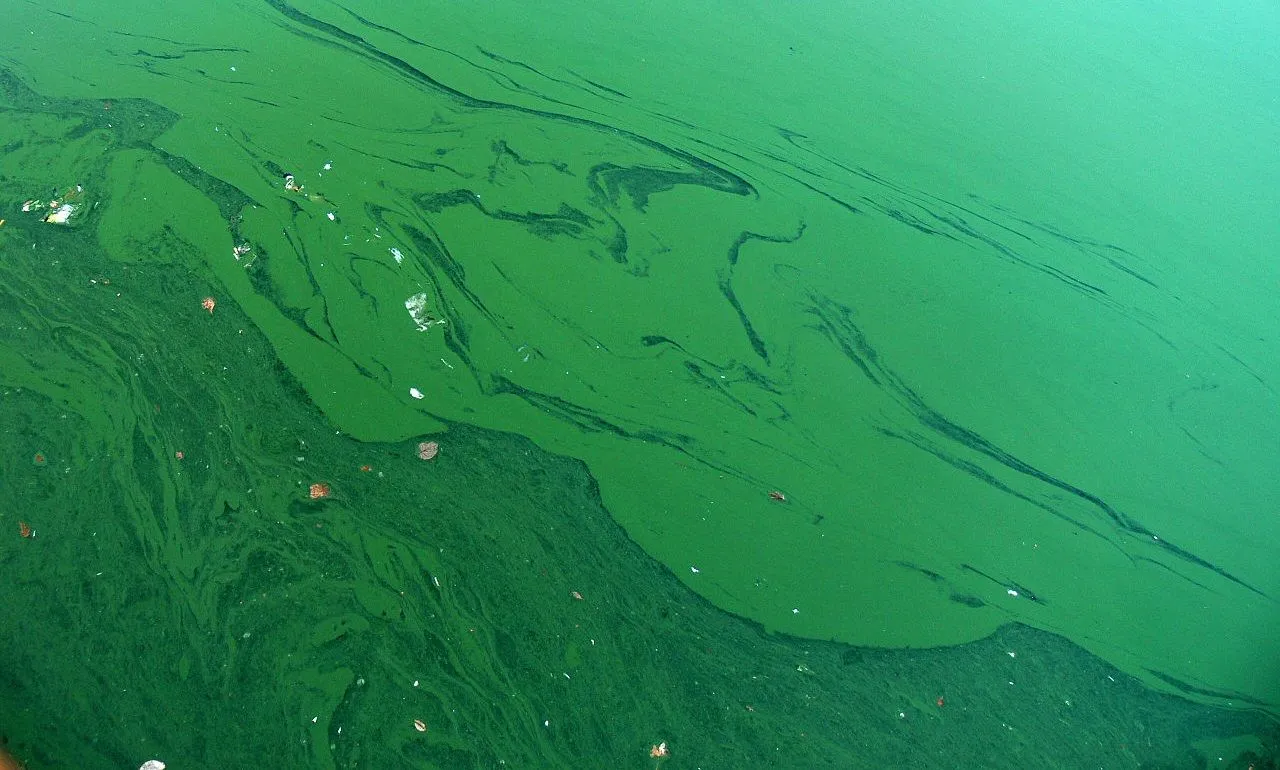
What Does It Look Like?
Pea Soup
Thick, bright green water that looks like pea soup or green paint
Surface Scum
Foamy, slimy film floating on the water's surface
Mats & Clumps
Green, brown, or reddish-purple mats floating or attached to the bottom
Musty Odor
A strong smell of rotting plant material near the water
Why Dogs Are Most at Risk
Dogs are far more likely than humans to be fatally exposed
They Swim In It
Dogs willingly jump into water humans would avoid, including murky or scummy areas
They Drink It
Dogs drink from shorelines and puddles where toxins concentrate
They Lick Their Fur
After swimming, dogs ingest toxins by grooming themselves, a major exposure route
Two Types of Toxins, Two Types of Damage
Neurotoxins (Anatoxins)
Attack the nervous system. Symptoms can appear within minutes and include stumbling, confusion, walking in circles, tremors, seizures, and respiratory paralysis. This is the fastest-acting form and can kill a dog before you reach a veterinarian.
Liver Toxins (Microcystins)
Attack the liver, causing damage that may appear within 1 to 4 hours. Signs include vomiting, bloody diarrhea, jaundice, weakness, and collapse. Can lead to liver failure, internal bleeding, and death. Dogs that survive may develop chronic liver disease.
Symptoms: Call Your Vet Immediately
These signs can appear within minutes of exposure
Vomiting or foaming at the mouth
Stumbling or unable to walk straight
Walking in circles, seeming confused
Tremors or uncontrolled shaking
Seizures
Difficulty breathing
Excessive drooling
Weakness, lethargy, or collapse
Bloody or severe diarrhea
Do not wait for symptoms to develop. If you think your dog has been in contaminated water, bathe them immediately with clean water to prevent them from licking toxins off their fur, and seek veterinary care right away. Some dogs die before reaching the hospital.
Call (608) 294-9494What To Do If Your Pet Is Exposed
Act immediately. Every minute matters.
Remove From Water
Get your dog out of the water and away from the contaminated area immediately
Rinse With Clean Water
Bathe your dog thoroughly with fresh water to prevent them from licking toxins off their coat
Call Your Vet Immediately
Don't wait for symptoms. Call us at (608) 294-9494 and head to the clinic right away
What to Expect at the Veterinarian
There is no antidote for cyanobacteria poisoning. Treatment is supportive care that may include inducing vomiting (if safe and early enough), activated charcoal to help neutralize remaining toxins, IV fluids, anti-seizure medications, medications for nausea and vomiting, and antibiotics. Your veterinarian will collect blood to establish baseline values and monitor organ function at 24 and 48 hours.
Hospitalization is likely. If the liver or nervous system has been affected, the prognosis can be poor even with aggressive treatment, which is why prevention and early action are critical.
Keeping Your Dog Safe
Prevention is the only reliable protection
Check Before You Go
Check Public Health Madison & Dane County's beach conditions page before visiting any lake or beach with your dog.
Trust Your Eyes
If the water looks green, scummy, foamy, or has a paint-like sheen, keep your dog away. If it smells like rotting plants, leave the area.
Obey Closures
If a beach is posted as closed, keep your dog out of the water. "Closed for swimming" means closed for dogs too. They can't read the signs.
Bring Fresh Water
Carry clean drinking water for your dog whenever you're near lakes. Don't let them drink from shorelines, puddles, or standing water.
Check Your Yard
Blue-green algae can grow in backyard fountains, birdbaths, decorative ponds, plant containers, and neglected pools. Clean and refresh standing water regularly.
Be Extra Careful After Rain
Heavy rain washes nutrients into the lakes. Hot, sunny days following rain are prime conditions for sudden, toxic blooms.
Stay Informed
Keep tabs on beach conditions throughout the summer
Questions? We're Here to Help
If you have questions about blue-green algae or any concerns about your pet's safety this summer, don't hesitate to reach out. We want to help your pet have a safe, healthy summer.
Call (608) 294-9494